Mastering Precision with Honeycomb Pin Lightburn Pins Templates
In the world of digital fabrication, the gap between a good design and a perfect cut often comes down to the geometry of your workspace. If you are working with laser cutters or paper crafting machines, you know that alignment is everything. This is where Honeycomb Pin Lightburn Pins Templates enters the conversation. It isn't a font in the traditional typographic sense—like a serif font or a sans serif font—but rather a set of essential design assets that function as the backbone of your production workflow. Think of these templates as the structural framework that ensures your creative vision translates into physical reality without error.
The Structural Integrity of Modern Fabrication
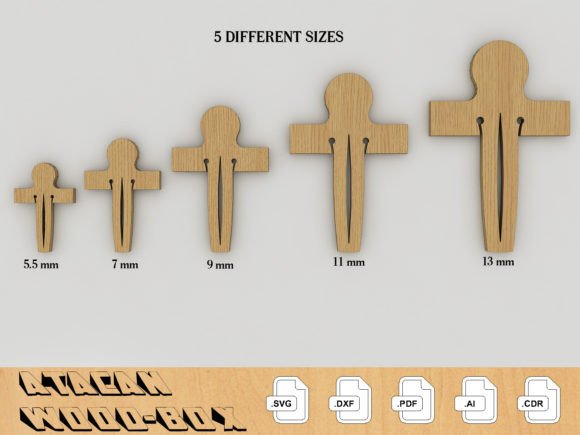
Visualize the honeycomb bed on your laser cutter. It is a grid of irregular hexagons designed to support your material while allowing smoke and debris to escape. However, that irregular surface often causes materials—whether wood, acrylic, or heavy cardstock—to sit unevenly. This leads to inconsistent focus, warped cuts, and ruined projects. The Honeycomb Pin Lightburn Pins Templates solve this by providing a precise vector map of the pin locations. These files allow you to create physical pins or jigs that lock into the honeycomb bed, leveling your material perfectly every time.
The visual characteristics of these templates are strictly utilitarian but aesthetically pleasing in their precision. They are clean, mathematically accurate vector lines. There is no "personality" in the sense of a handwritten font, but there is a personality of reliability. When you open these files in Lightburn or Glowforge software, you see a map of efficiency. The style is minimal, focusing entirely on function, which is the hallmark of great industrial design. For a small business owner or a serious hobbyist, this aesthetic of precision translates directly into a perception of professionalism.
Why Vector Versatility Matters for Your Brand
One of the strongest aspects of the Honeycomb Pin Lightburn Pins Templates is the sheer versatility of the file formats included. You will receive DXF, SVG, PDF, AI, and CDR files. In the design world, we often talk about the importance of a premium font working across different mediums; these templates offer that same flexibility for hardware.
If you are a designer using Adobe Illustrator (AI files) to prep your work, you can drop the template directly into your artboard to ensure your design elements align with the pin holes. If you are a crafter using a Cricut or Silhouette machine, the SVG and DXF compatibility means you can use these jigs for paper cutting and printing machines as well. This cross-compatibility influences your workflow's visual hierarchy. Instead of guessing where to place your material, you create a system where every piece is placed with intent. This consistency is vital for brand identity if you are selling physical goods. When a customer buys a set of coasters or a paper shadow box from you, they expect uniformity. These templates are the tool that guarantees that consistency.
Practical Application in Creative Projects
Let’s look at how these design assets integrate into real-world projects. Imagine you are a publisher or content creator producing a series of intricate paper cut maps or layered 3D paper art. The alignment of each layer is critical to the final visual impact. Using the Honeycomb Pin Lightburn Pins Templates, you can create a jig that sits on your laser bed. You cut the first layer, and then for the second layer, you simply drop the material into the same jig. The registration is perfect.
This is not just about laser cutting; it is about packaging design and editorial design in physical form. If you are creating custom packaging for a client, the box needs to fold perfectly. If your laser bed isn't level, the score lines might be too deep on one side and too shallow on the other. By using these templates to level the bed, you ensure the structural integrity of the packaging.
Furthermore, the compatibility with machines like the Gemini or Sizzix opens doors for those in the greeting card and scrapbooking industries. These users often work with intricate dies and embossing folders. By understanding the grid system provided by the honeycomb templates, you can optimize your layout to minimize waste—a key factor in profitability for small business owners.
Evaluating Fit and Workflow Integration
When you download the Honeycomb Pin Lightburn Pins Templates, you also receive JPG files for reference. While these are not for cutting, they are valuable for web design and social media graphics. If you are a blogger or influencer in the maker space, showing your audience your "secret sauce" for perfect cuts adds value to your content. You can use the reference images to explain your setup process, thereby enhancing your brand perception as an expert in the field.
From a technical standpoint, evaluating the fit of these templates is straightforward. They are designed to work with the standard Lightburn software environment. However, the true value lies in how they influence your readability of the workspace. In this context, readability isn't about reading text; it's about reading the physical space. Can you quickly identify where the pins go? Does the template make your setup process faster? The answer is yes. It streamlines the modern typography of your machine's bed, turning a chaotic grid into an organized workspace.
Optimizing Your Machine's Potential
Whether you are using a Glowforge Pro or a generic diode laser, the principles of physics remain the same. Focus is king. If your material is not perfectly flat, your laser beam will diverge, resulting in a wider kerf (cut width) and rougher edges. The Honeycomb Pin Lightburn Pins Templates act as a focusing aid. By ensuring the material is flat against the pins, you maintain the optimal focal distance across the entire sheet.
This attention to detail elevates your work from "homemade" to "professional." It affects the recognition of your products in the marketplace. Customers may not know why your cuts look cleaner than the competition's, but they will see the quality. It is a subtle form of brand strategy. Just as a creative font choice can make a logo memorable, the physical quality of your cut edges makes your product tangible and trustworthy.
For those using these templates with commercial font projects—say, you are cutting out wooden letters for signage—precision is non-negotiable. A wobbly letter "O" ruins the entire sign. By using the pin templates to secure the wood, you ensure that the laser traces the script font or display font outlines exactly as intended in your software.
The Ecosystem of Precision Tools
Think of the Honeycomb Pin Lightburn Pins Templates not as a standalone product, but as part of your wider ecosystem of design assets. Just as you curate a library of font pairings for your graphic design work, you should curate a library of jigs and fixtures for your physical production.
The ease of use is a major factor here. You don't need to be an engineer to use these. If you can load a file into Lightburn and hit "start," you can use these templates. The learning curve is negligible, but the return on investment in terms of time saved and material waste reduced is significant. It allows you to focus on the creative side—the logo design, the illustration, the layout—rather than fighting with the machine mechanics.
In conclusion, the Honeycomb Pin Lightburn Pins Templates are a fundamental tool for anyone serious about digital fabrication. They bridge the gap between the digital file and the physical object. They support a wide range of file formats from SVG to CDR