30 Poetry Challenge Templates a Day: Spark Student Creativity
Finding the right spark to ignite a student's love for writing can feel like a constant search. You want something engaging, structured enough to guide them, but open enough to let their unique voice shine. The 30 Poetry Challenge Templates a Day collection is built for exactly this purpose. It’s a practical toolkit designed to transform poetry from a daunting task into an exciting daily adventure.
More Than Just a Worksheet
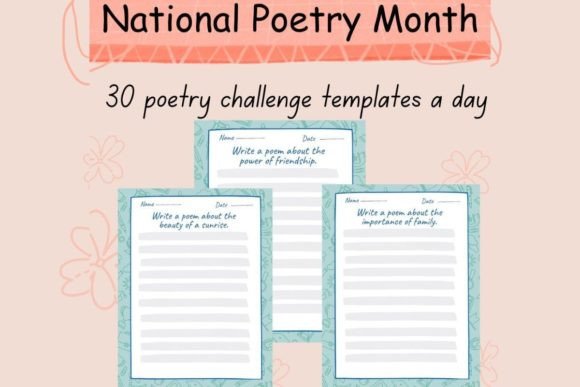
Each template in this collection is thoughtfully designed to be a launchpad, not a cage. The visual characteristics are clean and inviting, with clear prompts and plenty of space for creative expression. The personality is encouraging and playful, making poetry feel accessible to students who might otherwise shy away from it. The style avoids being overly childish or overly academic, striking a balance that works across a wide age range. Its overall appeal lies in its ability to provide just enough structure to overcome the fear of the blank page while leaving the creative direction entirely in the student's hands.
Where These Templates Shine
The true strength of the 30 Poetry Challenge Templates a Day is their versatility. They function as excellent design assets for educators and content creators alike.
- In the Classroom: Perfect for National Poetry Month, daily warm-ups, literacy centers, or as a creative break between other subjects. They help build a consistent writing habit.
- For Homeschooling Parents: Provide a structured yet flexible poetry curriculum that requires minimal prep time. The templates can be integrated into a broader language arts plan.
- Poetry Workshops & Clubs: Offer a fantastic starting point for group activities, sparking discussion and collaborative writing exercises.
- Content & Editorial Design: Bloggers and publishers focused on education or creativity can use these templates as downloadable freebies or part of a resource library to engage their audience.
- Personal Creative Practice: Even adults looking to journal or explore their own creativity can find value in the guided prompts.
The Impact on Learning and Engagement
Using a well-crafted resource like this does more than just produce poems. It influences the entire learning environment. The templates establish a clear visual hierarchy, guiding the student's eye from the prompt to the writing space, which aids in focus and task completion. This consistency builds professionalism in the presentation of student work, which in turn boosts their confidence and pride.
From a brand perspective for an educational publisher or tutor, offering such a high-quality, ready-to-use resource enhances recognition and audience engagement. It signals a commitment to practical, student-centered tools. The templates act as a creative font for expression, providing a familiar structure that students can return to daily, much like a trusted typeface becomes the voice of a brand.
Choosing and Using the Challenge
Evaluating if this challenge is the right fit for your needs is straightforward. Consider your primary goal: is it to build daily writing stamina, introduce different poetic forms, or simply to make poetry fun? The 30 Poetry Challenge Templates a Day excel at all three.
- Review the Variety: Skim through the templates to see the range of prompts—from concrete poems and acrostics to haikus and free verse explorations. This variety ensures sustained interest over the month.
- Test the Flow: Try a few templates yourself. Do the prompts spark ideas quickly? Is the layout intuitive? A good template should feel like a helpful guide, not a confusing puzzle.
- Consider Readability: The templates are provided as high-quality PDF and JPEG files (8.5" x 11", 300dpi). This ensures they print crisply, maintaining legibility whether used on paper or displayed on a screen. Clear readability is crucial for reducing frustration and keeping students focused on their ideas, not on deciphering the page.
- Font Pairing in Practice: While the templates themselves have a fixed design, they pair well with various teaching materials. Their clean style complements both serif and sans serif fonts you might use in lesson plans or handouts, creating a cohesive and professional-looking resource pack.
The goal is to provide a tool that feels less like an assignment and more like an invitation. By uploading your copy and starting the challenge, you're not just giving students 30 pages of work—you're giving them a month-long journey into the heart of language, observation, and self-expression. It’s a practical step toward building confident, creative communicators.